


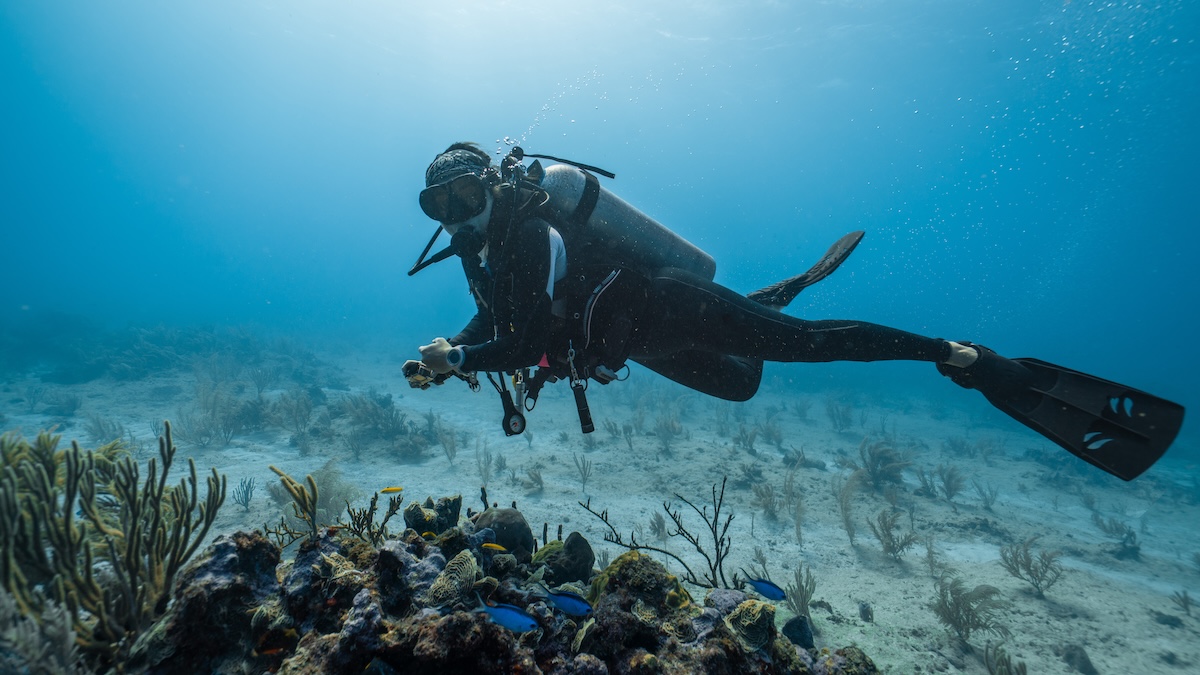
Recreational scuba diving ( also known as Aqua-Lung or scuba diving) is an increasingly common practice worldwide, with millions of people participating in this activity annually.
Diving takes us to discover a new world beneath the sea, gives us the opportunity to meet new people, and fosters greater environmental awareness and the importance of preserving the underwater world among those who practice it.
However, diving is carried out in a hostile environment where the body requires physiological adaptations that are stressful. Therefore, controlling cardiovascular risk factors and the diver's physical condition is essential for safe diving.
Currently, a medical evaluation is not mandatory before diving; however, awareness about cardiovascular health and the high prevalence of diseases such as hypertension, diabetes, and ischemic heart disease mean that cardiology consultations are becoming more frequent in this context.
In this blog we will address some cardiovascular considerations for the practice of recreational scuba diving based on the SEC-Association of Clinical Cardiology/SEC-GT Sports Cardiology Consensus Document (Rev Esp Cardiol. 2024;77(7):566–573).
Cardiovascular disease (stroke, acute myocardial infarction, unstable angina, etc.) is responsible for 26% of disabling injuries and 13% of deaths in diving, primarily among divers over 60 years of age. According to data from the Diving Alert Network's annual database, the most common cause of sudden death in divers is coronary artery disease, with the peak incidence occurring between the ages of 50 and 60.
Therefore, coronary artery disease screening is important in people over 45 years of age with risk factors (the main ones being high blood pressure, diabetes mellitus, high cholesterol or triglyceride levels, smoking, obesity, among others).
The basic cardiology examination includes an electrocardiogram and an assessment of the presence or absence of these risk factors. Based on this information, we will recommend additional complementary tests, such as an echocardiogram and/or a conventional stress test (ergometry), during your cardiology consultation.
If I have high blood pressure, can I dive?
The answer is yes, as long as you regularly monitor your blood pressure. Taking medication for high blood pressure is not an absolute contraindication for diving.
However, you should not dive if your BP is > 160/100 mmHg (grade 2 HBP).
If I have diabetes mellitus, can I dive?
The main risk associated with diabetes mellitus is loss of consciousness underwater due to hypoglycemia (a drop in blood glucose to dangerous levels), especially in those who require insulin as part of their routine treatment. In recent years, several underwater medicine societies have begun to be more lenient in accepting diabetic patients for diving.
The answer to the question then would be yes, as long as the disease is adequately controlled and no medication changes have been made in the last month.
If insulin is required, it is recommended to take special care by performing digital blood glucose monitoring before and after the dive, to be accompanied by a non-diabetic diver, and to adopt more conservative diving profiles (see conservative diving profiles below).
What is decompression sickness?
Decompression sickness (DSI) is defined by the formation of gas bubbles in tissues and blood, with a higher incidence in individuals with patent foramen ovale (PFO).
If you want to know more about what a PFO is and its importance, you can consult our CardioBlog UICAR entry: https://www.quironsalud.com/blogs/es/cardioblog/foramen-oval-permeable-ahora
The incidence of PFO in the general population is approximately 25%, while the incidence of DCI is much lower (0,005–0,08% of dives). Therefore, there is no general recommendation to screen recreational divers for PFO; however, other studies suggest that screening for the defect or adopting more conservative diving profiles could further reduce the incidence of DCI.
Conservative diving profiles are based on the adoption of some preventive measures such as:
– Reduce dive time. Always stay within non-decompression limits.
– Increase the surface interval (in case of 2 dives)
– Do only 1 dive per day
– Limit diving depth to 15 m (using air)
– Preferably use Nitrox (oxygen-enriched air).
– Extend decompression stops (if required)
– Avoid vigorous/isometric exercises for at least 4 hours afterwards (preferably 12 hours)
In summary, a medical checkup is recommended for divers, especially those over 45 years of age, including an electrocardiogram and assessment of classic risk factors.
Conservative diving profiles can minimize the incidence of decompression sickness more effectively.
The proper identification and treatment of cardiovascular disease are crucial to recreational diving safety.
By Dr. María del Mar Pérez Gil, specialist at UICAR
Bibliography:
(Rev Esp Cardiol. 2024;77(7):566–573)