


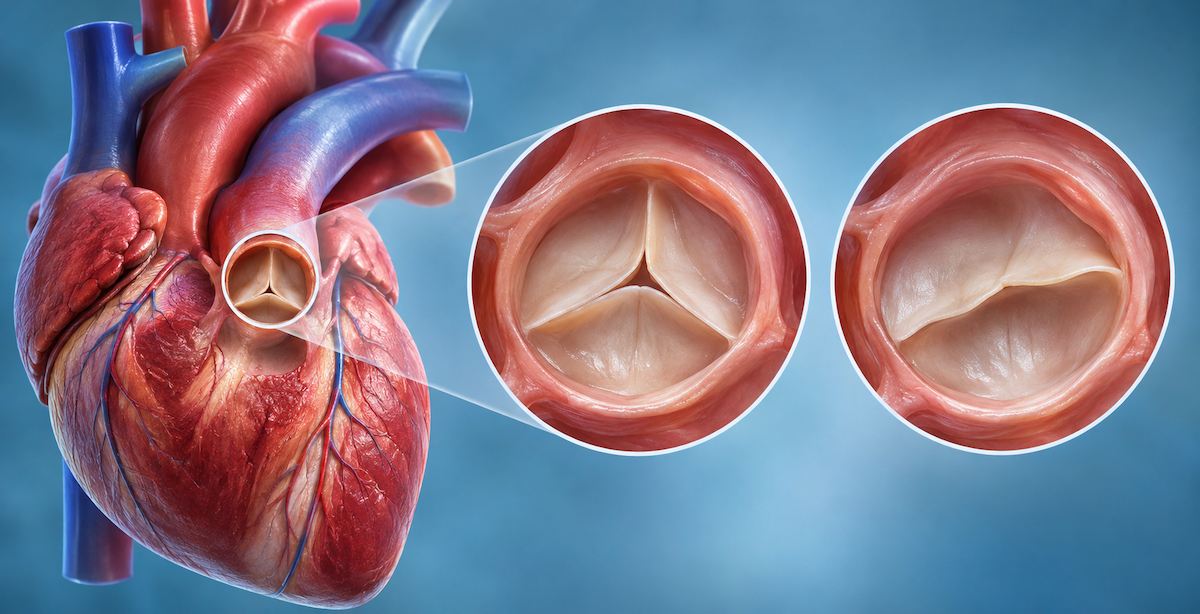
Bicuspid aortic valve is the most common congenital heart valve anomaly, affecting approximately 1-2% of the population. Although many people can live without symptoms for decades, diagnosis Early intervention and cardiological follow-up are essential to detect possible complications.
Most people are born with an aortic valve made up of three small structures, called leaflets, that open and close to allow blood to flow from the heart to the rest of the body. However, some people are born with a valve that has only two functional leaflets. This condition is known as a bicuspid aortic valve.
It is a congenital condition, meaning it is present from birth, and in many cases it produces no symptoms or affects quality of life. In fact, some people discover they have a bicuspid aortic valve during a routine cardiac checkup.
Dr. Lizandra Machin Martínez, a cardiology specialist at Quirónsalud Sur Hospital, explains the main characteristics of this condition, its possible complications, and recommendations for maintaining good cardiovascular health.
What is a bicuspid aortic valve and how does it differ from a normal valve?
The aortic valve functions as a gate that controls the flow of blood from the left ventricle of the heart into the aorta, the main artery of the body.
Under normal conditions, this valve is made up of three leaflets that open when the heart pumps blood and close to prevent it from flowing backward.
In people with a bicuspid aortic valve, there are two functional leaflets instead of three. This anatomical difference can cause the valve to wear down more quickly over time, leading to functional problems.
However, having a bicuspid valve does not necessarily mean suffering from serious heart disease.
Is it serious to have a bicuspid aortic valve?
One of the main concerns of people who receive this diagnosis is whether it poses a significant risk to their health.
The answer is that not all bicuspid aortic valves cause heart problems. Many patients maintain normal valve function for much of their lives and do not require any specific treatment.
However, it is important to have regular check-ups because three main complications can develop:
-
Aortic stenosis: occurs when the valve narrows and makes it difficult for blood to flow out of the heart, forcing it to work harder.
-
Aortic insufficiency: occurs when the valve does not close properly and allows some of the blood to flow backward into the left ventricle.
-
Aortic dilation: This involves an increase in the diameter of the body's main artery. In certain circumstances, this dilation can increase the risk of serious vascular complications.
These alterations do not necessarily appear in all patients, but they justify the importance of maintaining adequate cardiological follow-up.
What are the symptoms of a bicuspid aortic valve?
A bicuspid aortic valve can remain asymptomatic for many years. Sometimes, the diagnosis is made incidentally during an echocardiogram ordered for another reason or after a heart murmur is detected.
When significant alterations occur in the functioning of the valve or the aorta, symptoms such as the following may appear:
-
Excessive tiredness or fatigue during usual activities.
-
Difficulty breathing, especially when exerting oneself.
-
Chest pain or tightness.
-
Dizziness or a feeling of unsteadiness.
-
Episodes of loss of consciousness or syncope.
It is important not to ignore these symptoms, especially if they appear for the first time or progressively worsen.
In the event of sudden and severe chest pain, especially if it spreads to the back, loss of consciousness, or significant difficulty breathing, urgent medical attention should be sought.
How is bicuspid aortic valve diagnosed and monitored?
The diagnosis is mainly made using a transthoracic echocardiogram, a non-invasive imaging test that allows observation of the structure and function of the heart.
This examination helps the cardiologist to identify the morphology of the valve, check for aortic stenosis or insufficiency, and measure the diameter of the aortic root and ascending aorta.
In certain patients, it may be necessary to complete the study with other tests, such as cardiac computed tomography (CT) or cardiac magnetic resonance imaging, especially when it is necessary to assess the size of the aorta more accurately.
How often should checkups be done?
The frequency of check-ups depends on several factors, including valve function, aortic diameter, and the evolution of findings in imaging tests.
In patients with aortic dilation, a first reassessment may be recommended at 6–12 months. If measurements remain stable, subsequent check-ups are individualized and can usually be performed every 6–24 months, depending on the risk.
When the valve is functioning correctly and the aorta has normal dimensions, the specialist establishes a follow-up adapted to each clinical situation.
The absence of symptoms does not mean that check-ups should be abandoned, since some disorders can develop progressively and silently.
What care should a person with a bicuspid aortic valve follow?
Although it is a congenital disorder that cannot be corrected through lifestyle changes, adopting certain healthy habits can help control cardiovascular risk factors.
Dr. Machin Martinez highlights the importance of paying attention to several aspects.
1. Maintain regular cardiac check-ups
Regular monitoring allows for the identification of changes in the valve or in the size of the aorta before symptoms appear and assesses whether it is necessary to modify the treatment.
2. Control blood pressure
High blood pressure can increase the pressure on the walls of the aorta and promote its dilation. Therefore, maintaining adequate blood pressure is one of the main preventive measures.
3. Perform adapted physical exercise
Physical activity is beneficial for cardiovascular health and many people with bicuspid aortic valve can practice sports normally.
However, when aortic dilation or significant valvular abnormalities are present, it is necessary to adjust the intensity and type of exercise. In some cases, it may be advisable to avoid very intense strength training or activities that cause sudden increases in blood pressure.
Before starting a demanding sporting activity, it is advisable to consult with a cardiologist.
4. Follow a heart-healthy diet
A balanced diet, rich in fruits, vegetables, legumes, whole grains and healthy fats, helps control blood pressure, cholesterol and other cardiovascular risk factors.
5. Avoid tobacco and control other risk factors
Not smoking, maintaining a healthy weight, and properly managing diseases such as diabetes or hypertension are measures that help protect the health of the heart and blood vessels.
6. Recognize the warning signs
Knowing the possible manifestations of complications allows you to seek medical attention when necessary.
Do all people with a bicuspid aortic valve need surgery?
No. Most people with a bicuspid aortic valve do not need surgical intervention at the time of diagnosis.
Surgery is considered when certain complications arise, such as severe aortic stenosis, significant valvular insufficiency, or significant dilation of the aorta.
The decision depends on the severity of the disorder, the presence of symptoms, the dimensions of the aorta, and the individual characteristics of each patient.
In cases where intervention is required, the medical team assesses the different surgical alternatives, which may include repair or replacement of the valve and, when indicated, treatment of the dilated aorta.
Is a bicuspid aortic valve hereditary? Can my children have it?
Bicuspid aortic valve disease has a familial and genetic component. For this reason, first-degree relatives of a diagnosed individual—parents, siblings, and children—have a higher probability of having the same condition.
Therefore, it is recommended to perform a screening echocardiogram on first-degree relatives, even when they do not have symptoms.
This examination allows for the early detection of a bicuspid valve and checks the condition of the aorta, facilitating follow-up when necessary.
Living with a bicuspid aortic valve: the importance of cardiac follow-up
Receiving a diagnosis of a bicuspid aortic valve can be worrying, especially when it is discovered during a medical check-up without having had any previous symptoms.
However, it is important to remember that being born with a bicuspid aortic valve does not mean having a diseased heart.
Many people maintain a completely normal life, practice physical exercise and carry out their daily activities without limitations.
The key is to be aware of this anatomical peculiarity, to have the recommended check-ups and to maintain healthy lifestyle habits.
Early diagnosis and individualized cardiological follow-up allow for the timely identification of possible complications and the adoption of necessary measures to preserve cardiovascular health and maintain a good quality of life.