


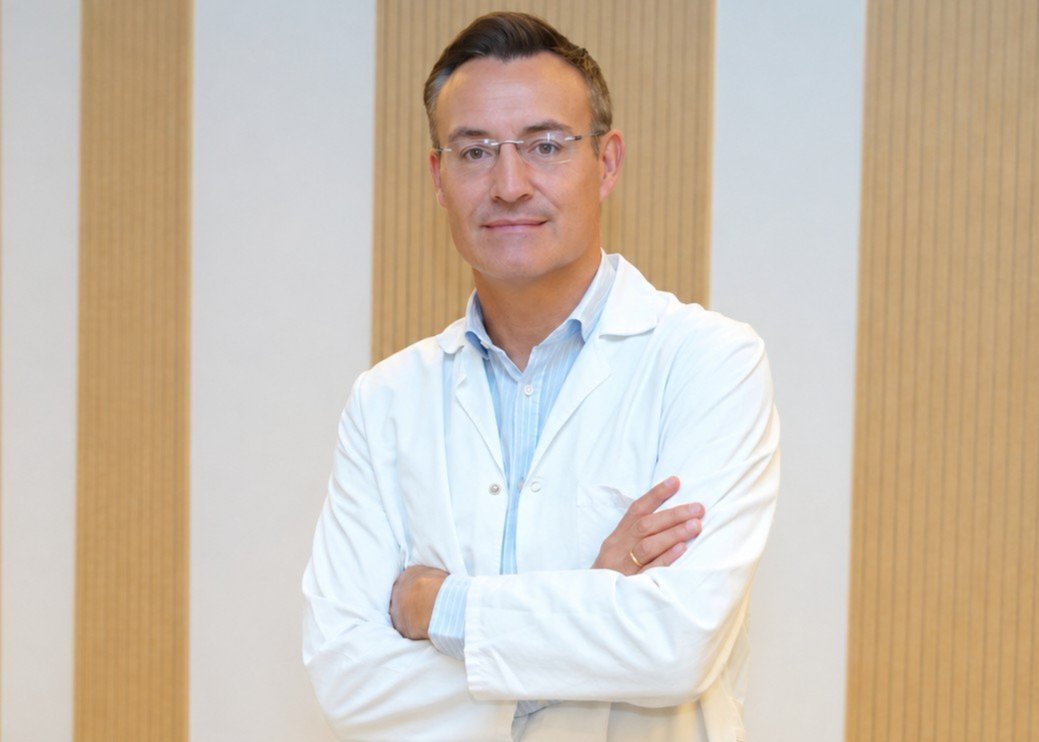
The head of the Comprehensive Cardiology Unit Department and associate professor at Francisco de Vitoria University reflects on the role of teaching, empathy, and communication in the training of future generations of doctors.
The training of future healthcare professionals goes far beyond the acquisition of scientific knowledge and technical skills. In a medical field marked by technological innovation and scientific advances, the ability to listen to, understand, and support the patient remains an essential part of clinical practice.
Teaching plays a fundamental role in the transmission of these values, in which the experience and example of professionals acquire special relevance.
Dr. Roberto Martín Reyes, head of the Cardiology Department, director of the Comprehensive Cardiology Unit (UICAR) and associate professor at Francisco de Vitoria University, shares his vision on the responsibility of training new generations of doctors and the importance of preserving the human dimension of medicine.
Besides medical knowledge, what do you consider essential to convey to future healthcare professionals during their training?
Medicine is much more than acquiring scientific knowledge or mastering technical skills. It is a profession that demands responsibility, commitment, teamwork, and a deep vocation for service.
In addition to rigorous training, it is essential to transmit values such as honesty, humility, respect for the patient and the importance of maintaining a continuous learning attitude.
I have always believed that being a good doctor is not just about knowing what to do, but also about understanding why we do it, who we do it for, and how we should do it.
The patient relationship is an essential part of clinical practice. How can students be taught the importance of listening, informing, and supporting?
Primarily through example. Listening to the patient is a fundamental clinical tool for understanding their needs and concerns.
Furthermore, we must teach how to communicate clearly and approachably, helping patients understand their situation and supporting them during times of uncertainty.
That is why I consider it essential that students participate from early stages in real clinical practice, observing how their teachers interact with patients and learning that each medical history belongs, above all, to a person.
From your experience as a doctor and teacher, what impact do you think empathy has on the quality of care and on patient trust?
Empathy is one of the cornerstones of good medical practice. A patient who feels heard and understood develops greater trust and participates more actively in decisions about their health.
We are living in a time of great technological advances that are transforming medicine. However, the more technology advances, the more important it will be to preserve the human dimension of our profession.
Technology helps us diagnose and treat better, but empathy is what allows us to truly understand the person in front of us.